

Most people start their week feeling rushed. Emails pile up, meetings sneak onto the calendar, and priorities blur together. But what if you could start every Monday already knowing exactly what matters most—without the chaos?
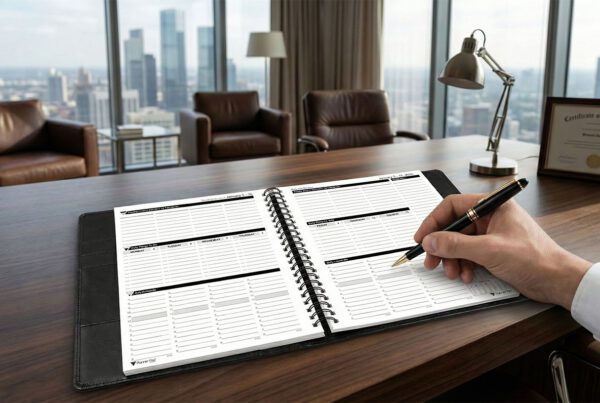
That’s what a Sunday planning ritual can do, and when paired with the Planner Pad Organizer, it turns your week from reactive to intentional.
Why Sunday Planning Works
Sunday sits at a perfect crossroads—it’s close enough to look back on the past week and far enough ahead to plan for the new one. Taking even 20 minutes to reflect and plan can help you:
- Identify what worked and what didn’t.
- Refocus on your top priorities for the coming week.
- Reduce “Monday morning overwhelm.”
- Align your projects, actions, and time.
This simple ritual ensures you start your week with clarity instead of confusion.
Step 1: Reflect on the Week You’re Leaving Behind
Open your Planner Pad Organizer and look at the week that just ended. Ask yourself:
- What did I actually accomplish?
- Which tasks slipped through the cracks—and why?
- What drained my energy or inspired me most?
This reflection phase helps you notice patterns and plan smarter, not harder. It’s the foundation of what we explore in our blog on how to organize multiple roles in one planner.
Step 2: Revisit Your Big Picture Projects
Next, move to the top section of your Planner Pad—the project categories. This is where your roles and responsibilities live: Work, Family, Personal, Health, etc.
Take a few moments to jot down the projects or goals that need attention this week. If you need guidance on this step, check out our overview of the funnel system and how it connects your big goals to daily actions.
Step 3: Funnel Your Projects Into Weekly Actions
Now comes the middle section—where projects turn into actions. For each project, identify a few actionable steps you can realistically tackle this week.
You don’t need to fill every line—this is about clarity, not clutter. The beauty of the Planner Pad is how it naturally helps you prioritize, as we describe in how the Planner Pad helps you see a realistic view of your life.
Step 4: Schedule Your Week
Once you’ve set your weekly actions, flow them into the daily sections of your Planner Pad.
- Add appointments and meetings first.
- Then place your action steps where they actually fit.
- Leave white space—you’ll need it.
This process gives you an honest look at your capacity. If it doesn’t fit, it doesn’t fit—and that’s okay. You’re planning from reality, not wishful thinking.
Step 5: End with Intention
Close your Planner Pad with a quick mindset check:
- What’s one thing I want to feel by next Friday?
- What can I simplify or delegate this week?
- What’s one thing I can look forward to?
You’re not just managing tasks—you’re managing your week as a whole life system.
Make It a Ritual
Turn your Sunday setup into something enjoyable:
- Light a candle or make tea.
- Put on calming music.
- Spend a few minutes reviewing your upcoming priorities.
A consistent Sunday ritual builds momentum. Over time, it becomes a grounding habit that connects your goals, your time, and your mindset—exactly what the Planner Pad is designed to do.
For more inspiration on building planning habits that last, visit our blog library or explore our Planner Pad Organizers to find the format that fits your life best.
Final Thought
Your week doesn’t start Monday morning—it starts Sunday night, with a few intentional minutes that set the tone for everything ahead.
The Planner Pad Organizer turns that short ritual into a powerful framework—one that helps you start each week clear, calm, and confidently in control.