

Planning for 2026 isn’t just about writing goals down—it’s about building a system that keeps you focused, flexible, and moving forward all year long. In a world full of distractions, a paper-based planning method can be one of the most powerful tools for staying organized and turning long-term goals into daily action.
This guide walks through how to use a planner to stay organized, why analog planning works so well for goal achievement, and how the Planner Pad® method can help you make 2026 your most intentional year yet.
Why Using a Planner Still Works for Goal Achievement
Digital tools are great for reminders, but when it comes to clarity and follow-through, research and experience consistently show that writing things down improves focus and retention. A planner helps you:
- See your goals and priorities in one place
- Break big goals into manageable steps
- Reduce mental clutter and decision fatigue
- Create a repeatable planning habit
For 2026 goal planning, the key isn’t more productivity—it’s better alignment between goals, priorities, and daily actions.
Step 1: Start 2026 With Clear, Focused Goals
Before you ever touch your weekly pages, define what success looks like for 2026.
Categories to consider when setting 2026 goals:
- Career and work
- Health and fitness
- Finances and budgeting
- Personal growth and learning
- Relationships and family
- Home and life organization
Write these goals at the front of your planner or in a dedicated goals section. If you’re not sure where to start, this guide on goal-setting with a planner is a helpful foundation:
https://plannerpads.com/why-a-planning-system-can-be-the-missing-link-to-getting-organized/
Step 2: Use a Top-Down Planning Method (Big Picture to Daily Action)
One of the biggest reasons people fall off their goals is that their daily to-do list doesn’t connect back to what actually matters.
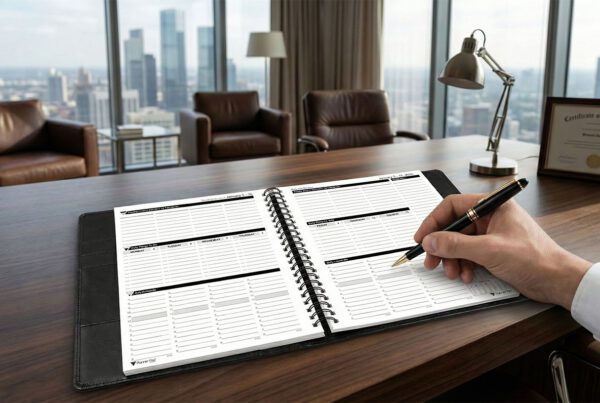
The Planner Pad® Funnel Down Planning System® solves this by working in three layers:
- Top section: Brain dump all tasks, ideas, and responsibilities
- Middle section: Assign priorities by category
- Bottom section: Schedule only what truly fits into your week
This top-down structure ensures your weekly plan supports your long-term 2026 goals instead of competing with them.
Learn more about how the system works here:
Step 3: Plan Your Week With Intention (Not Overload)
Weekly planning is where organization turns into execution.
A simple weekly planning ritual:
- Review your annual and quarterly 2026 goals
- Identify 3–5 priority outcomes for the week
- Pull only the most important tasks into your schedule
- Leave white space for flexibility
If you want to make weekly planning a consistent habit, this article dives deeper:
https://plannerpads.com/how-the-planner-pad-organizer-helps-you-project-manage/
Step 4: Stay Organized Without Losing Flexibility
Life changes—and your planner should support that, not fight it.
Using a paper planner makes it easier to:
- Reprioritize when new tasks come up
- Visually see what’s realistic
- Move tasks forward without feeling behind
Unlike rigid digital systems, a paper planner adapts as your week evolves. This flexibility is critical for long-term goal achievement in 2026.
For more on staying organized with a planner, read:
https://plannerpads.com/how-to-use-a-planner-effectively-the-ultimate-guide-to-paper-planners/
Step 5: Review and Reset Monthly to Stay on Track
Consistency beats perfection. A short monthly review keeps your 2026 goals from fading into the background.
At the end of each month:
- Review what worked and what didn’t
- Adjust priorities for the next month
- Reconnect weekly plans to your larger goals
This habit ensures your planner becomes a living system, not just a notebook.
You may also enjoy:
https://plannerpads.com/how-to-stay-organized-all-year-using-a-paper-planner/
Choosing the Right Planner for 2026 Goal Planning
Not all planners are created equal. If your focus for 2026 is organization and goal achievement, look for a planner that:
- Supports prioritization, not just scheduling
- Has enough space for thinking and planning
- Encourages review and reflection
The Planner Pad® is designed specifically for people who want structure without rigidity.
Explore 2026 planners here:
https://plannerpads.com/organizers
Final Thoughts: Make 2026 the Year Your Planner Works for You
Achieving your 2026 goals doesn’t require doing more—it requires doing what matters most, consistently.
By using a planner to:
- Clarify your goals
- Prioritize your time
- Plan your weeks intentionally
- Stay flexible and organized
You create a system that supports real progress all year long.
If 2026 is the year you want more focus, less overwhelm, and better follow-through, it starts with the right planning method.